


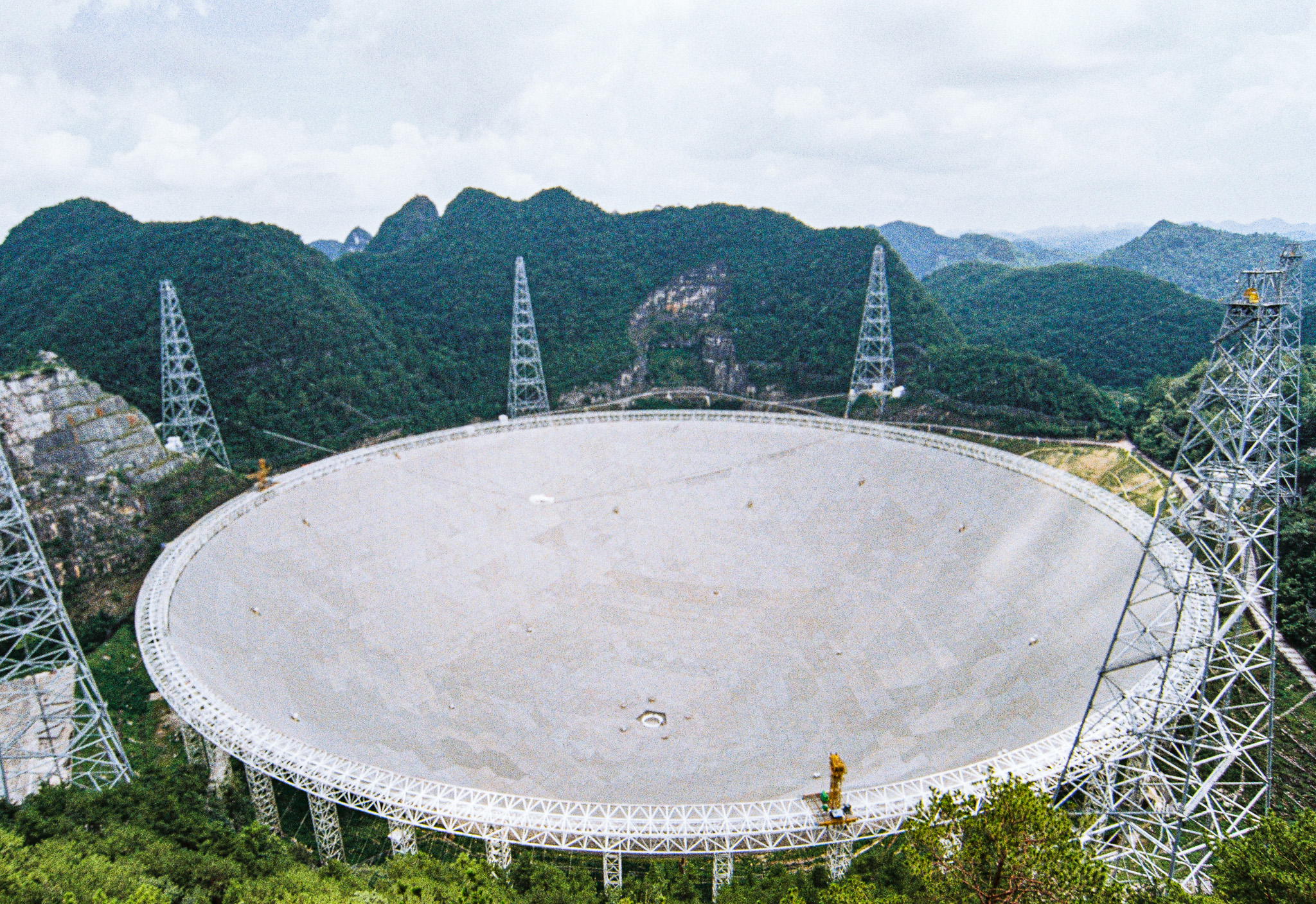
China FAST telescope is making significant strides in detecting fainter cosmic signals thanks to homegrown technologies. This advancement greatly supports deep-space missions and enhances our understanding of the universe.
Introduction to China FAST telescope
The China FAST telescope, officially known as the Five-hundred-meter Aperture Spherical Telescope, is a groundbreaking achievement in astronomical research. Located in Guizhou province, this colossal structure is designed to detect faint cosmic signals that can provide insights into the universe’s mysteries.
With its advanced technology and homegrown innovations, the FAST telescope has significantly enhanced China’s capabilities in space exploration.
Its features include:
- Large Aperture: The largest single-dish radio telescope in the world, allowing for unmatched sensitivity.
- Advanced Signal Processing: Utilizing cutting-edge algorithms to filter and analyze signals from deep space.
- Support for Deep-Space Missions: Playing a crucial role in various international astronomical projects.
As the FAST telescope continues to operate, it raises questions about its position as the best tool for uncovering cosmic phenomena.
How does the FAST telescope work?
The China FAST telescope operates using a unique design that enables it to capture faint cosmic signals with remarkable efficiency. This powerful instrument features a large, spherical aperture that measures 500 meters in diameter, making it the world’s largest radio telescope.
FAST’s primary function is to detect radio waves emitted by celestial objects, such as pulsars and galaxies. The telescope uses an array of advanced technologies, including:
- High-precision positioning systems: These systems allow for accurate tracking of celestial bodies as they move across the sky.
- Ultra-sensitive receivers: These enhance the detection of weak signals that would otherwise go unnoticed.
- Advanced data processing algorithms: These help filter and analyze the incoming data, improving signal clarity.
With these features, the FAST telescope is poised to significantly advance our understanding of the universe and its many mysteries.
The significance of detecting cosmic signals
The significance of detecting cosmic signals cannot be understated, especially in the context of deep-space exploration. The China FAST telescope, with its unparalleled sensitivity, plays a crucial role in this field. By capturing faint radio waves emitted from distant celestial bodies, the telescope enables scientists to gather data that was previously beyond reach.
Detecting these signals opens up several avenues for research and discovery:
- Understanding the Universe: Cosmic signals provide insights into the formation and evolution of galaxies.
- Searching for Extraterrestrial Life: By identifying potential signals from intelligent civilizations, the FAST telescope contributes to the quest for life beyond Earth.
- Studying Dark Matter: Analyzing cosmic signals can help researchers unlock the mysteries surrounding dark matter and its influence on the cosmos.
As technology advances, the China FAST telescope stands out as a pivotal instrument in the pursuit of knowledge about our universe.
Technological advancements in space exploration
Recent advancements in technology have significantly enhanced the capabilities of the China FAST telescope, allowing it to detect fainter cosmic signals than ever before. This sophisticated instrument employs a range of innovative features that improve its performance in space exploration.
- High Sensitivity: The telescope’s large collecting area enables it to capture weak radio waves from distant celestial objects.
- Advanced Data Processing: Enhanced algorithms and software facilitate the quick analysis of vast amounts of data, making it easier to identify potential signals.
- Adaptable Design: The telescope’s structure allows for adjustments in orientation, improving its ability to focus on specific astronomical phenomena.
These technological advancements not only bolster the FAST telescope’s effectiveness but also position it as a key player in future deep-space missions, potentially unearthing new discoveries in the cosmos.
Future missions supported by FAST
The China FAST telescope is poised to play a crucial role in future space missions aimed at uncovering the mysteries of the universe. With its unparalleled sensitivity, the FAST telescope can detect faint cosmic signals, making it an invaluable tool for astronomers and scientists.
Several upcoming missions are expected to leverage the capabilities of the FAST telescope, including:
- Search for extraterrestrial life: Scientists plan to use FAST to monitor potential signals from alien civilizations.
- Mapping dark matter: The telescope’s precision will assist in studying the distribution of dark matter across galaxies.
- Exploring pulsars: FAST will investigate pulsars for insights into the fundamental physics of the universe.
As these missions unfold, the advancements and discoveries supported by the China FAST telescope will significantly enhance our understanding of the cosmos.
By SCJiang via Openverse