

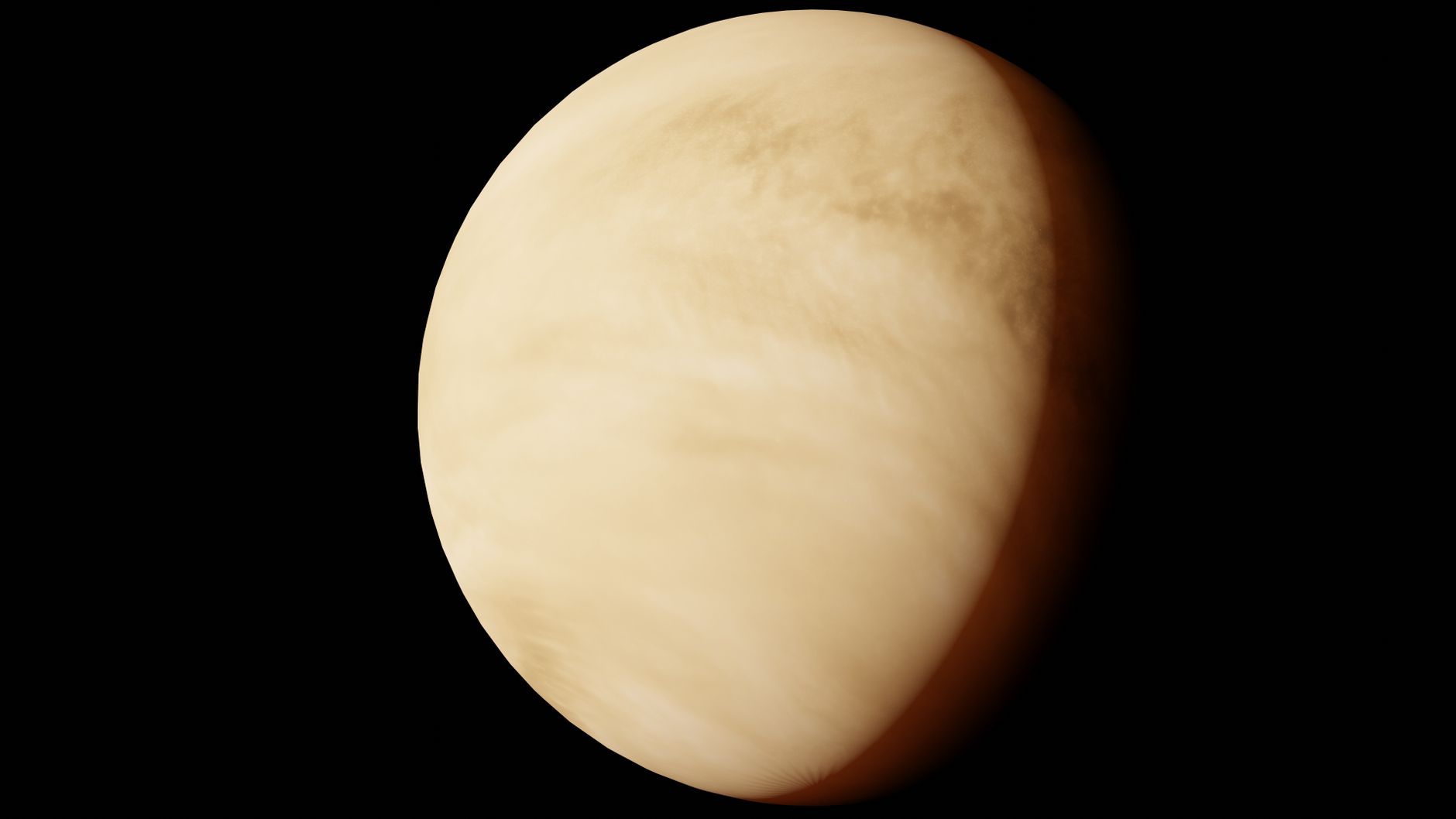
The disappearing planet neighbor has captivated scientists, showcasing how it wobbles like a top. This discovery opens new avenues for understanding celestial dynamics and planetary interactions.
What is a disappearing planet?
A disappearing planet is a celestial body that experiences significant changes in its visibility and characteristics over time. These planets are often found in binary systems where they are influenced by the gravitational pull of a neighboring star or planet. As a result, the disappearing planet can exhibit dramatic fluctuations in brightness or even appear to fade away entirely.
Recent studies have identified the first known disappearing planet, which has sparked interest in the scientific community. This planet is not alone; it has a neighbor that is believed to cause it to wobble like a top due to their gravitational interactions. This wobbling effect can lead to variations in temperature and atmospheric conditions, further contributing to the planet’s elusive nature.
Scientists are keen to understand the mechanisms behind these phenomena, as they could provide insights into the formation and evolution of planetary systems. The concept of a disappearing planet neighbor opens new avenues for research in astronomy and enhances our understanding of the complexities of space.
How does a neighbor affect its wobble?
The intriguing phenomenon of a disappearing planet neighbor has drawn the attention of astronomers, particularly in understanding how such celestial bodies interact. When a planet, like the one recently observed, experiences significant gravitational influences from its neighboring celestial bodies, it can lead to a fascinating wobble effect, akin to a top spinning off-center.
This wobble is primarily caused by gravitational pulls exerted by nearby planets or moons. As these forces act on the planet, they can alter its rotational axis, resulting in a change in orientation over time. Researchers have identified several factors that contribute to this effect:
- Mass of the neighbor: Heavier neighboring planets exert stronger gravitational forces.
- Distance: The proximity of the neighbor influences the strength of the gravitational pull.
- Orbital dynamics: The relative motion of the planet and its neighbor plays a crucial role in the wobbling effect.
Understanding these interactions sheds light on the complexities of planetary systems and how they evolve over time.
The science behind planetary interactions
The study of planetary interactions reveals fascinating dynamics, especially in the case of a disappearing planet neighbor. When two celestial bodies orbit each other, their gravitational forces can lead to significant changes in their behaviors. This is particularly evident in the wobbling motion known as axial precession, where a planet’s axis tilts and shifts over time.
In this context, the disappearing planet is influenced by its companion, causing it to wobble like a top. This wobble is not an isolated phenomenon; it has implications for the planet’s climate and potential habitability. As the axis shifts, it can alter how sunlight is distributed across the planet’s surface, leading to drastic temperature changes.
Researchers have observed that the extent of this wobble is often proportional to the mass and distance of the neighboring planet. Thus, understanding these interactions is crucial for astronomers seeking to unravel the mysteries of planetary systems and their evolution.
Recent discoveries in space
Recent discoveries in space have unveiled fascinating insights into the dynamics of celestial bodies. One of the most intriguing findings is related to a disappearing planet neighbor that exhibits peculiar wobbling behavior. This phenomenon has broad implications for our understanding of planetary interactions.
Researchers observed that the disappearing planet, characterized by its unusual fading characteristics, is significantly influenced by its companion. This neighbor’s gravitational pull has been shown to create a wobble effect, much like a top spinning off balance. The study of such interactions enhances our understanding of how planets can evolve and change over time.
- Recent telescopic observations have confirmed the existence of this unique planetary pair.
- Data suggests that the wobbling effect could lead to changes in the orbit of the disappearing planet.
- Further research may shed light on the fate of similar celestial bodies in our galaxy.
As scientists continue to investigate these phenomena, the mysteries surrounding disappearing planets and their neighbors deepen.
Implications for future research
The discovery of a disappearing planet neighbor and its unique wobbling behavior has significant implications for future research in planetary science. Understanding how these celestial bodies interact can provide insights into the dynamics of planetary systems and their evolution over time.
Researchers may want to focus on several key areas:
- Gravitational Effects: Investigating how the gravitational pull from neighboring planets influences the stability and rotation of other planets can enhance our understanding of planetary formation.
- Atmospheric Conditions: Studying the atmospheric changes that occur due to a disappearing planet’s wobble may reveal how such dynamics affect habitability.
- Long-term Observations: Longitudinal studies of these disappearing planet neighbors will be crucial in tracking their behavior and understanding the underlying mechanisms of their interactions.
- Exoplanet Exploration: Insights gained from this research can inform models used in the search for exoplanets, particularly those that may exhibit similar disappearing characteristics.
Overall, the study of a disappearing planet neighbor and its wobble opens up new avenues for exploration and understanding of our universe.
Expert opinions on the findings
Experts are weighing in on the fascinating phenomenon of the disappearing planet neighbor and its implications for our understanding of planetary dynamics. According to Dr. Emma Rodriguez, an astrophysicist at the Space Research Institute, “The gravitational effects from the neighboring planet can significantly influence the wobble of its counterpart, leading to intriguing changes in its orbit.”
Dr. Liam Chen, a planetary scientist, emphasized the importance of these findings: “This discovery not only highlights the complex interactions between celestial bodies but also raises questions about the long-term stability of such systems. The wobbling behavior observed is akin to a top spinning off balance, showcasing the delicate balance of gravitational forces.”
Additionally, Dr. Sarah Patel noted, “Understanding the mechanics behind a disappearing planet neighbor can provide insights into the formation and evolution of planetary systems, which may help us identify similar patterns in other solar systems.”
As the discussion continues, researchers are hopeful that these insights will pave the way for future explorations in the field of exoplanet studies.
Conclusion and future observations
In conclusion, the discovery of the disappearing planet neighbor has opened up new avenues for research and understanding within the astronomical community. The unique characteristics of this planetary system challenge previous notions about stability and planetary interactions. As scientists continue to study the dynamics involved, the wobbling behavior of these celestial bodies may provide crucial insights into the life cycles of planets and their potential for habitability.
Future observations are essential to unraveling the mysteries surrounding these disappearing planets. With advancements in telescope technology and observational techniques, researchers are optimistic about gathering more data. This could lead to a deeper comprehension of how neighboring planets influence each other’s orbits and physical characteristics.
Moreover, continued exploration of these phenomena may enhance our knowledge of exoplanetary systems and their formation. As we monitor the evolution of such intriguing celestial neighbors, we may find ourselves one step closer to understanding the complex tapestry of our universe.
The recent discovery of the disappearing planet neighbor has sparked excitement among astronomers. As they continue to study its peculiar movements, the implications of a wobbling like a top is real!
Photo by Zelch Csaba on Pexels