

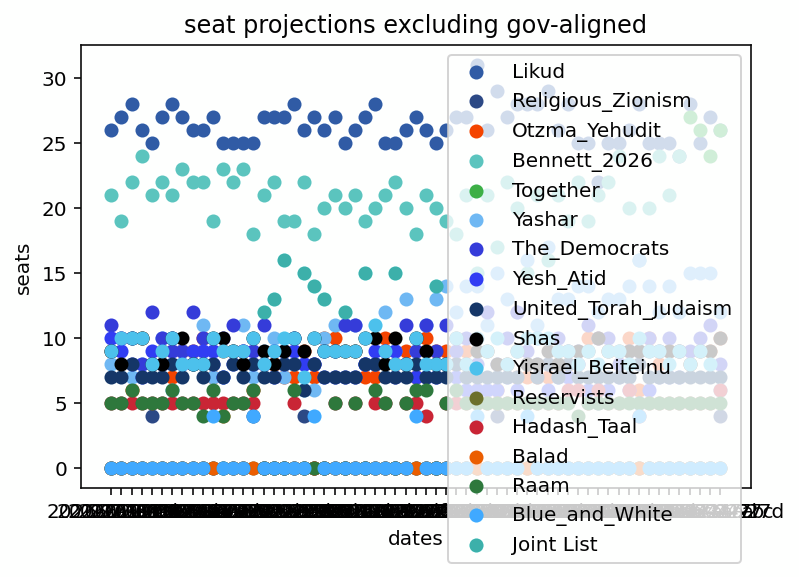
Israeli election polls show a potential stalemate as voters prepare for Tuesday’s election. This uncertainty could impact the political landscape significantly.
Overview of the Current Polling Data
As the Israeli election approaches, recent polling data indicates a significant stalemate among the leading political parties. The final Israeli election polls reveal a landscape where no single party appears poised to secure a clear majority, setting the stage for potential coalition negotiations.
According to the latest surveys, the following trends have emerged:
- The Likud party, led by Benjamin Netanyahu, remains a frontrunner but is projected to fall short of a majority.
- The opposition bloc, including Yair Lapid’s Yesh Atid and Benny Gantz’s National Unity party, shows similarly competitive numbers, complicating the path to forming a government.
- Smaller parties, such as those representing Arab voters and the far-right, are also expected to play a crucial role in shaping the next Knesset.
This stalemate, as indicated by the Israeli election polls, underscores the challenges ahead for any party hoping to lead a stable government. Voter turnout and last-minute shifts in public sentiment could further influence these dynamics, making the outcomes even more unpredictable as election day draws near.
Key Players in the Election
The upcoming Israeli election has brought several key players to the forefront, each representing distinct political ideologies and voter bases. As the Israeli election polls indicate a potential stalemate, these figures will play crucial roles in shaping the future of the country.
- Benjamin Netanyahu: The leader of the Likud party, Netanyahu has been a dominant figure in Israeli politics for over a decade. His campaign focuses on security and economic stability, appealing to right-wing voters.
- Yair Lapid: As the head of the Yesh Atid party, Lapid emphasizes social issues and democratic values. He aims to attract centrist voters looking for alternatives to Netanyahu’s long-standing leadership.
- Naftali Bennett: The leader of the right-wing Yamina party, Bennett advocates for a tough stance on security and territorial issues. His coalition-building skills will be critical in a fragmented political landscape.
- Merav Michaeli: Representing the Labor party, Michaeli focuses on social justice and economic reforms, targeting left-leaning voters who desire progressive change.
As the Israeli election polls suggest a potentially complicated outcome, these leaders will need to navigate complex alliances and negotiations to form a stable government.
Voter Sentiment and Expectations
As the Israeli election polls indicate a potential stalemate, voter sentiment appears to be a mix of uncertainty and anticipation. Many citizens express concerns over the implications of a divided parliament, which could lead to prolonged negotiations and instability in governance.
Recent surveys reveal that a significant portion of the electorate is dissatisfied with the current political landscape. This dissatisfaction stems from:
- Economic Issues: Many voters are worried about rising living costs and economic stagnation.
- Security Concerns: Ongoing tensions in the region have left voters anxious about national security and safety.
- Political Fragmentation: The proliferation of smaller parties may complicate coalition-building efforts.
Amid these challenges, expectations for the upcoming elections vary widely. Some voters hope for a decisive outcome that could break the stalemate, while others anticipate another round of negotiations that may leave Israel’s political future in limbo.
As election day approaches, the focus will remain on how these sentiments translate into votes, shaping the next chapter in Israel’s political saga.
Impact of Polls on Election Day
The impact of the current Israeli election polls is palpable as citizens prepare to head to the polls on Tuesday. With the latest data indicating a potential stalemate among the leading parties, voters are faced with a challenging decision-making process. Many are concerned that the results could lead to a fragmented Knesset, complicating the formation of a stable government.
As the election day approaches, the uncertainty surrounding coalition possibilities is a prominent topic of discussion among voters. Key issues such as security, the economy, and social policies are at the forefront of many citizens’ minds, influencing their choices in the ballot box. Some voters express frustration, feeling that their preferred parties may not be able to secure a decisive victory, which raises the question of whether their votes will truly matter.
Polling data has revealed a notable division in public opinion, leading to a sense of urgency among party leaders. The stakes are high, and the looming possibility of an impasse may force negotiators to reconsider their alliances. As the countdown to election day continues, the implications of these Israeli election polls will undoubtedly shape the future of the nation.
Analysis of Potential Outcomes
As the Israeli election polls indicate a stalemate among the major political parties, analysts are closely examining the potential outcomes that could shape the future of the nation. With no clear frontrunner emerging, the likelihood of coalition negotiations post-election has intensified, creating a complex political landscape.
One potential outcome is a continuation of the current deadlock, where no party gains a decisive majority. This scenario could lead to:
- Extended Coalition Talks: Political leaders may find themselves in lengthy negotiations to form a government, potentially leading to compromises that could alienate certain voter bases.
- Increased Political Fragmentation: A rise in smaller parties could further complicate coalition-building, as diverse agendas must be reconciled.
- Impact on Governance: A fragmented Knesset may struggle to pass essential legislation, affecting key areas such as security, economy, and public health.
Moreover, the implications of these outcomes extend beyond domestic policies. International relations, particularly with neighboring countries and global powers, may also be influenced by the composition of the next government. As voters prepare for Tuesday’s election, the stakes are high, and the uncertainty looms larger than ever.
What a Stalemate Could Mean for Israel
The latest Israeli election polls indicate a significant stalemate, leaving political analysts and party leaders pondering the implications for the future of the country. A deadlock in the election results may lead to a number of challenging scenarios that could reshape Israel’s political landscape.
First, a stalemate could necessitate the formation of a coalition government, which may require parties with opposing platforms to collaborate. This could lead to a compromise on key issues, such as security, the economy, and foreign policy, but it might also result in gridlock if disagreements persist.
Furthermore, voters may become increasingly disillusioned if they perceive their representatives as unable to reach consensus. This could impact future election cycles, potentially leading to a rise in support for more extreme parties as citizens seek decisive leadership.
Another significant factor is the potential for repeated elections if a clear majority remains elusive. This scenario could further strain public resources and diminish faith in the electoral process.
As Israel approaches this pivotal moment, the results from the polls will be critical in determining whether the nation can navigate the complexities of its political situation or face ongoing instability.
The latest Israeli election polls indicate a deadlock between major parties, leaving voters with difficult decisions. As the Israeli election polls show a stalemate, coalition negotiations are expected to become increasingly complex.
By Slomo666 via Openverse